From Curiosity to Creation: How an FPD Junior Brought Robotics to Life
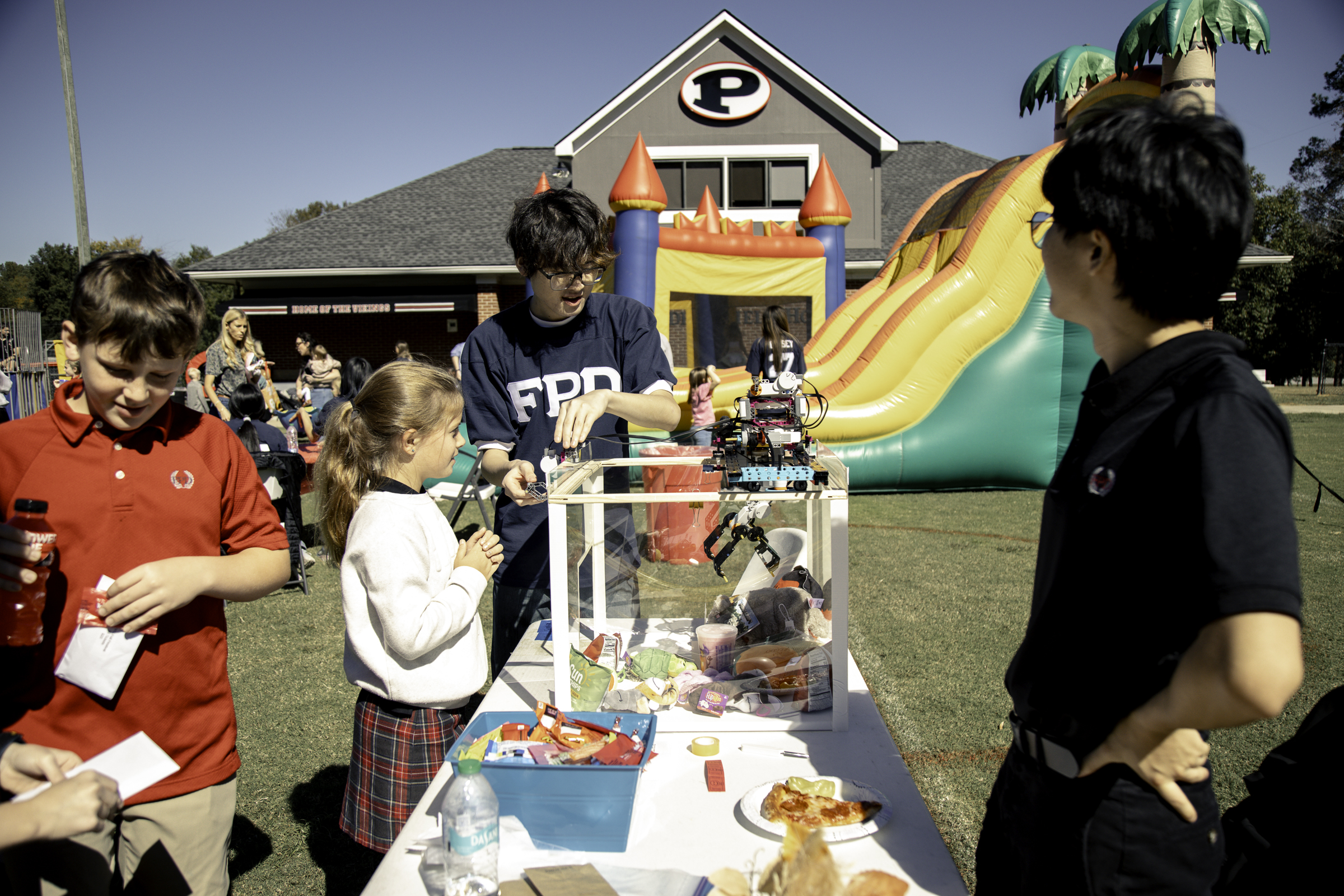
Here at First Presbyterian Day School in Macon, learning often starts with curiosity and grows through hands on experiences. For Taeyoung Noh, a junior in the Class of 2027, that curiosity turned into a 3D printed claw machine built for the FPD Fall Festival. For Taeyoung, the project was about more than engineering. It was about impact.
“I believe that even brief moments in our daily lives can leave a lasting impression and play an important role in shaping a person’s identity, especially when that person is young,” he shared. “I hoped that my small act of sharing my skills could inspire someone else in a meaningful way.”
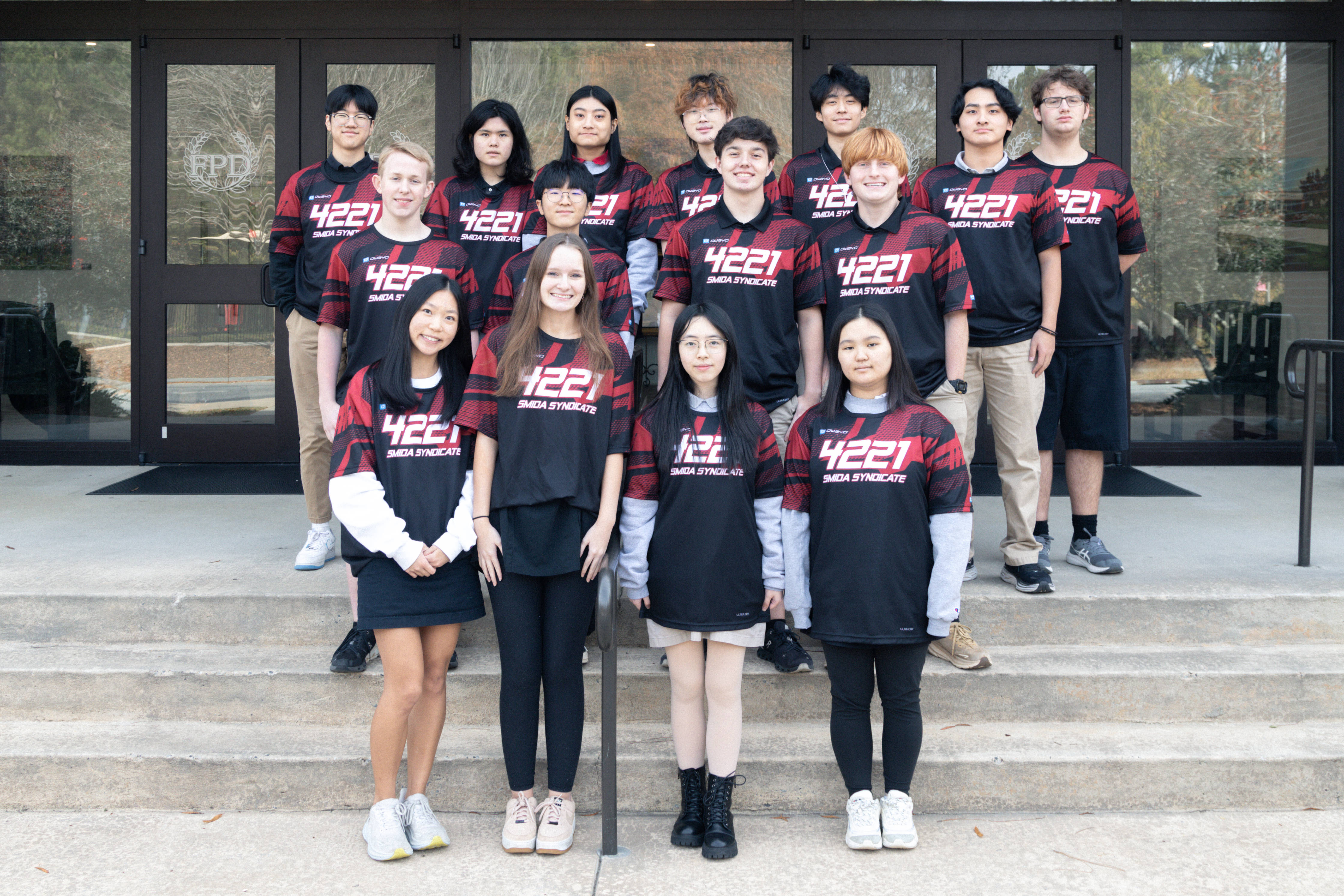
As a member of the FPD Robotics Club and a volunteer who teaches robotics classes for Campus Club and the Methodist Home, Taeyoung wanted to create something familiar and fun that could introduce younger students to robotics. Using LEGO EV3 and LEGO Spike kits he already worked with, he designed and built a claw machine that blended play with purpose. “That intention led me to design and build this 3D printed claw machine,” he said.
From Idea to Build
The entire project came together in about three days, from initial planning to final assembly. “I used the LEGO EV3 system, which is a beginner friendly tool that helps students learn programming and robot construction in a fun and accessible way,” Taeyoung explained. “From planning the design, to building and programming the EV3 components, to creating the frame, the entire process took about three days.” The result was a working machine that captured attention at the Fall Festival while quietly introducing robotics concepts to lower school students.
Skills Put to Work
Designing a claw machine required much more than creativity. Taeyoung relied on skills from math, coding, and logical reasoning to bring the project to life. “A claw machine is essentially a type of robot,” he said. “Designing, assembling, and programming it all required problem solving skills and logical thinking.”
He also emphasized the importance of early exposure to coding. “Coding is like learning a new language,” Taeyoung explained. “Most beginners start with block based coding and algorithms, similar to building with LEGO bricks, to understand how code works.”
That early exposure shaped his own journey. “I began learning coding through EV3 when I was in kindergarten, and that experience has significantly shaped my ability to think logically and program effectively today.”
Support Along the Way
Faculty mentorship played an important role in the project’s success. Mrs. Tami Tesch-Jerles provided continued support and access to tools that helped Taeyoung bring his idea to life.
Her guidance reflects the collaborative learning environment that allows FPD students to explore ideas deeply and confidently.
Community Conversations and Impact
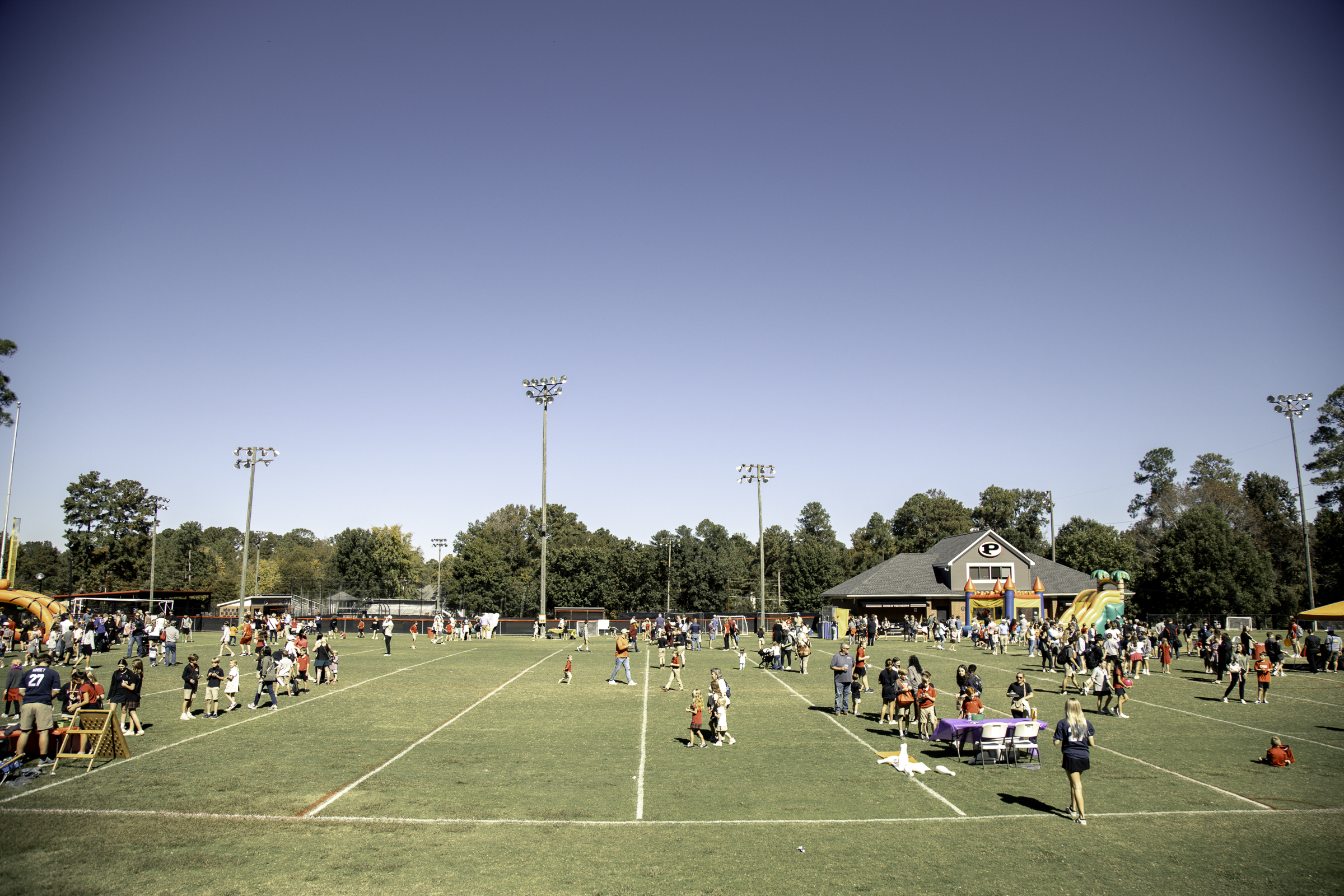
The claw machine sparked curiosity well beyond the Fall Festival. Families and students asked questions about how it worked and how robotics is taught at FPD.
One question that stood out to me was from a parent who said, ‘My child loves robots and wants to build them, but they’re still very young. How should I support them?"
Taeyoung’s advice focused on balance and exploration. “At such a young age, it’s important to let children explore many different fields,” he said. “But if their interest becomes clear, starting with LEGO Spike at home is a great way to let them try building on their own.” He also encouraged families to look for opportunities beyond the classroom. “If that interest continues, finding age-appropriate competitions helps students gain hands-on experience.”
Looking Ahead
Taeyoung plans to continue studying engineering, with a long-term goal that blends innovation and service. “My long-term goal is to integrate engineering knowledge with the medical field to help advance medical technology, such as medical devices, through innovative engineering applications,” he shared.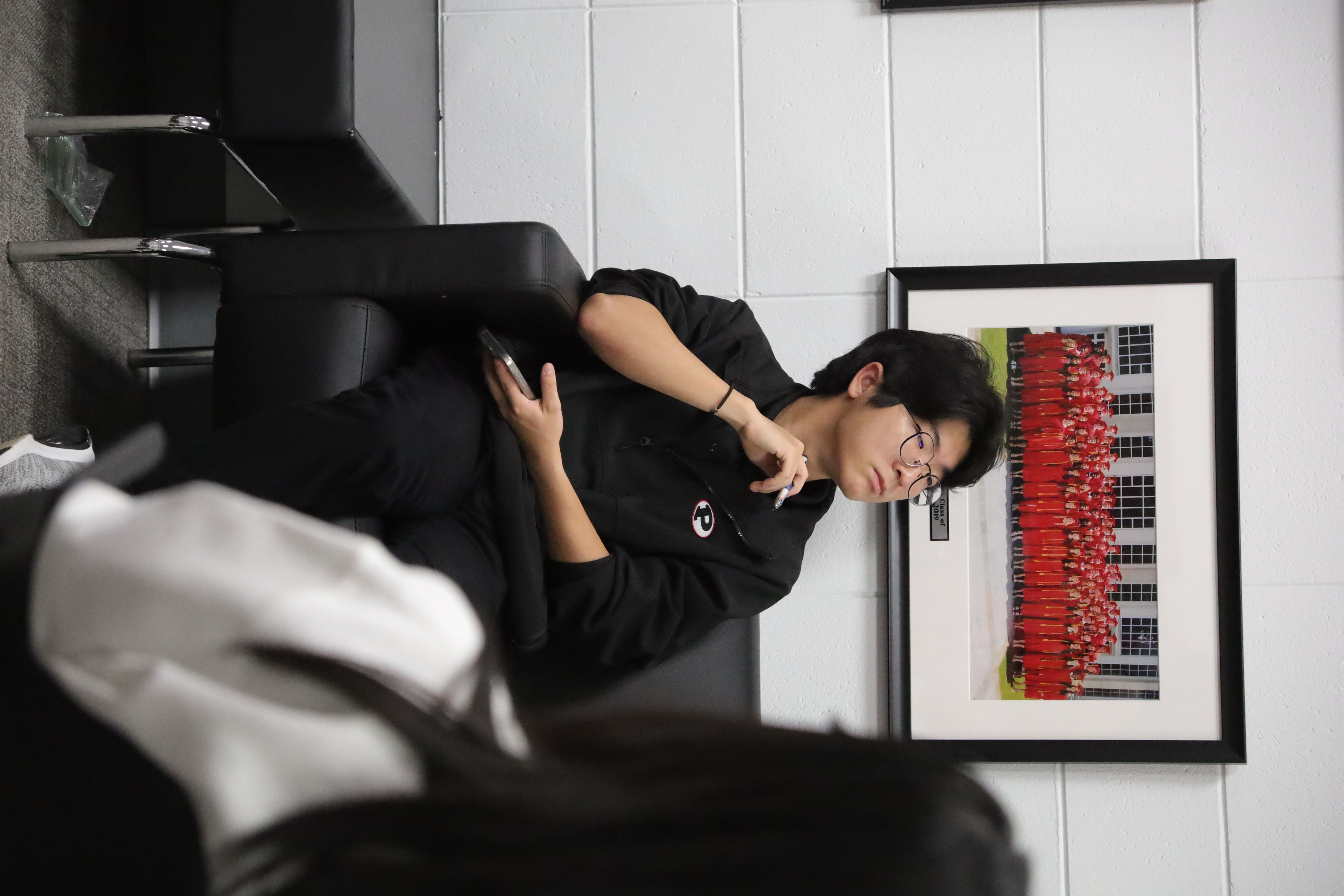
A Word for Students with Big Ideas
For students who have ideas but feel unsure where to start, Taeyoung offered practical advice.
Experience as much as possible and write down what you learn, he said. If you have an idea but don’t know where to begin, try breaking it into smaller, more manageable ideas.”
He also encouraged students to learn from peers. “Talk to students who regularly participate in competitions in that area. Try following their methods and studying the field. Your own goals will naturally become clearer over time.” Projects like this reflect what we value at First Presbyterian Day School. Students are encouraged to explore curiosity, develop skills, and use their gifts to serve others, guided by mentors who help turn ideas into reality.